How to Revolutionize Your Landscaping Business with Smart Fleet Management
Optimize your landscaping fleet's efficiency with IoT and GPS tracking. Discover how to reduce costs, boost safety, and enhance customer service.
How to Revolutionize Your Landscaping Business with Smart Fleet Management
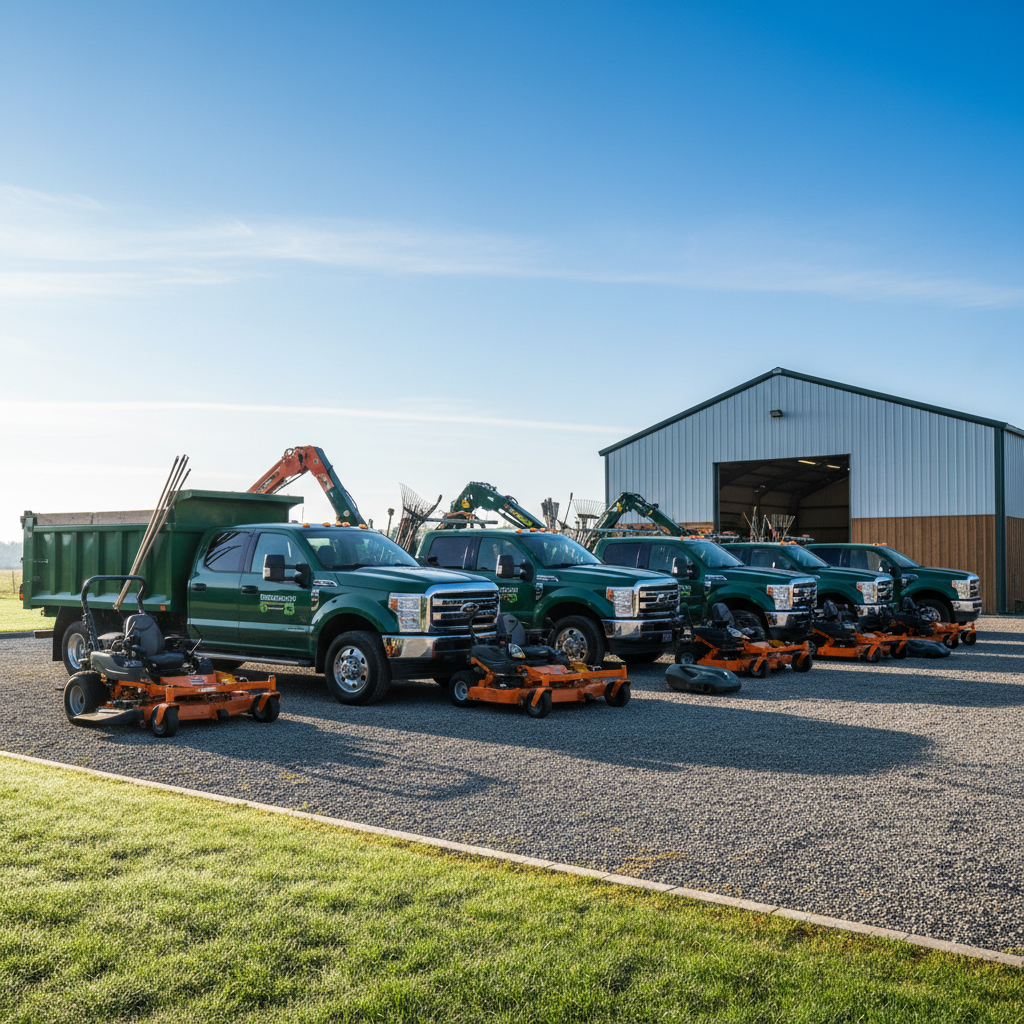
TL;DR: IoT and GPS fleet management for landscaping and lawn care businesses uses connected devices to track vehicles, equipment, and personnel in real-time. This improves efficiency, safety, and customer service by providing data for better routing, maintenance, and productivity. It's a powerful tool to optimize landscaping fleet efficiency.
Welcome, fellow landscaping and lawn care business owners! As your technical mentor, I'm here to demystify how the latest technology can revolutionize your operations. Today, we're diving into IoT and GPS Fleet Management.
What is IoT and GPS Fleet Management?
IoT (Internet of Things) refers to a network of physical devices, vehicles, and equipment embedded with sensors, software, and connectivity. These devices collect and exchange data. GPS (Global Positioning System) uses satellites to determine precise location.
IoT fleet management combines these technologies to give you a comprehensive overview of your entire fleet. This includes trucks, trailers, mowers, and even handheld tools. It's a core component of IoT fleet management landscaping.
Why Your Landscaping Business Needs This
The benefits are substantial and directly impact your bottom line. You can gain real-time visibility into where your assets are, how they're being used, and their condition. This is crucial for modern GPS tracking lawn care business operations.
This technology allows you to optimize landscaping fleet efficiency like never before. You'll reduce wasted time, fuel, and labor costs. Plus, it enhances safety for your crews and improves customer satisfaction through more accurate arrival times.
Key Components of an IoT Fleet Management System
A robust system typically includes several interconnected parts. These work together to provide actionable insights.
- GPS Trackers: Small devices installed in vehicles and on equipment. They transmit location data.
- Sensors: Can monitor engine hours, fuel levels, temperature, and more. These are vital for IoT for commercial lawn maintenance.
- Telematics Devices: Collect and transmit data from GPS trackers and sensors.
- Fleet Management Software: The brain of the operation. It visualizes data on maps, generates reports, and offers various management tools. Popular fleet management solutions for landscapers are available.
How to Implement IoT and GPS Fleet Management
Getting started might seem daunting, but a structured approach makes it manageable.
Step 1: Define Your Goals
What do you want to achieve? Better route planning? Reduced idling? Improved equipment maintenance? Identifying your priorities will guide your software selection.
Step 2: Research and Select a Provider
There are many fleet management solutions for landscapers on the market. It's essential to choose one that fits your specific needs and budget.
-
Samsara: A leading provider offering a comprehensive platform. It includes GPS tracking, vehicle telematics, driver management, and equipment monitoring. Their dashboard is user-friendly and provides robust reporting. (Samsara)
-
Geotab: Another strong contender known for its advanced hardware and extensive third-party integrations. They offer detailed data analytics and strong compliance features. (Geotab)
-
Verizon Connect: Offers a broad suite of solutions, including GPS tracking, workforce management, and dashcams. They have a strong focus on mobile workforce solutions. (Verizon Connect)
[!TIP] When comparing, ask for demos and trial periods. See how the software handles your specific types of equipment and operational workflows.
Step 3: Install Hardware
This usually involves installing GPS trackers and telematics devices in your vehicles. Some systems allow for easy installation of sensors on equipment like mowers.
[!IMPORTANT] Ensure your chosen provider offers professional installation services or clear, easy-to-follow DIY instructions if you plan to install it yourself.
Step 4: Train Your Team
Your crews and dispatchers need to understand how to use the system. Training ensures adoption and maximizes the benefits.
- Explain the benefits to them.
- Demonstrate key features like dispatching and real-time tracking.
- Show them how it helps with scheduling and job completion.
Step 5: Analyze and Act on Data
This is where the real magic happens. Regularly review the data to identify trends and areas for improvement.
Practical Applications for Landscaping Businesses
The insights from IoT fleet management landscaping are incredibly practical.
- Route Optimization: Analyze historical trip data to find the most efficient routes. This directly optimizes landscaping fleet efficiency.
- Fuel Management: Monitor idling times and driving habits to reduce fuel consumption.
- Equipment Utilization: Track how often mowers, blowers, and trimmers are used. This helps with scheduling maintenance and identifying underutilized assets. IoT for commercial lawn maintenance can track engine hours on expensive machinery.
- Driver Behavior: Monitor speeding, harsh braking, and other behaviors to promote safer driving.
- Customer Service: Provide accurate ETAs to clients, enhancing their experience. This is a key advantage of GPS tracking lawn care business operations.
The Future is Connected
Embracing IoT fleet management is no longer a luxury; it's becoming a necessity for staying competitive. By leveraging GPS tracking lawn care business capabilities and other IoT features, you can build a more efficient, productive, and profitable operation.
Remember, the goal is to make informed decisions that drive your business forward. This technology provides the data-driven insights you need. Let's get your fleet running smarter!